
Menopause in the Workplace: My House of Commons Visit
On Monday 9th March, TACT Senior People Business Partner, Trudy, attended a landmark Menopause in the Workplace place event at The House of Commons. She reflects on why the event was so important to her.
It was an International Women’s Day celebration hosted by Carolyn Harris MP, Chair of the APPG (All-Party Parliamentary Group) on Menopause. Held in the Jubilee Room in Westminster, the event brought together leaders from government, clinical practice, major employers, advocates and campaigners to explore what meaningful menopause support should look like as the UK moves toward mandatory Menopause Action Plans by 2027.
Supported by Menopause Mandate, Wellbeing of Women, and Theramex, the event set out not only to highlight the urgency of workplace menopause protections, but also to elevate real lived experience, evidence-based insight, and practical solutions for employers of every size.
The afternoon opened with Carolyn Harris MP’s welcome, outlining why menopause protection in the workplace matters right now and setting the tone for a highly practical and deeply human discussion.
A moving lived‑experience account from Melissa Robertson followed – a reminder that behind every policy conversation are women navigating the emotional, physical and often professional toll of unmanaged menopausal symptoms. Her story grounded the room in the reality that culture, empathy and awareness matter just as much as policy.
The main panel discussion, chaired by Michelle Griffith Robinson OLY, brought together experts from diverse perspectives: legal protection, corporate implementation, small‑organisation practice, national data, and clinical guidance.
Each speaker was challenged to share not abstract ideals, but real, implementable solutions. The philosophy that shared understanding that culture change and practical support must go hand‑in‑hand was universal – because policy alone isn’t enough.
I was invited to contribute to the panel to share how a smaller organisation like TACT has been able to introduce powerful menopause support without the resources of a multinational business.
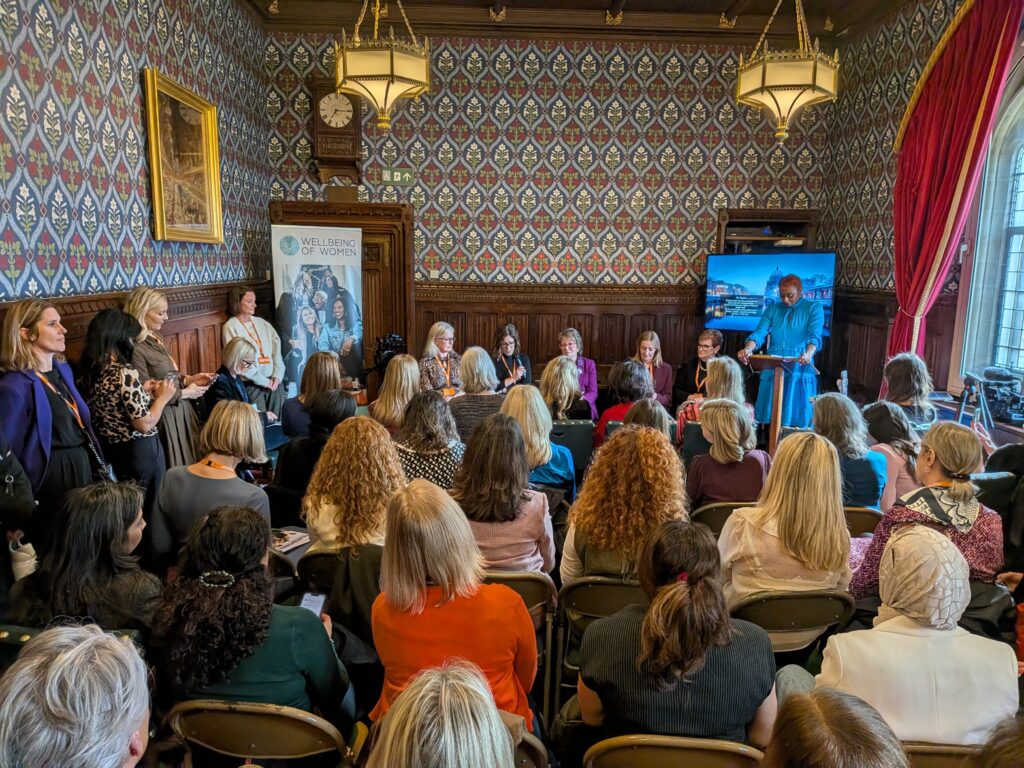
Why it’s so important to me
Before joining TACT, I held a demanding role in an inner‑London academy. When I began experiencing unrecognised perimenopausal symptoms, my confidence eroded. Without workplace support, I convinced myself I was failing and ultimately left a career and a workplace that I had contributed to significantly, leaving myself financially worse off.
Years later, I realised it had been the perimenopause all along – not incompetence. That experience is why, when the chance came to lead wellbeing and menopause support at TACT, my ambition returned – I focussed on ways to ensure others, the next generation if you like, could avoid a repeat of my less than satisfactory workplace experience.
TACT being ‘ahead of the curve’
TACT is bridging the gap between traditional workplaces and the millions of women outside them. While the government and most employers struggle to tackle the needs of women beyond the workplace, TACT already offers the same menopause support to Foster Carers, recognising that their needs are the same as our employees, and their homes are still work spaces.
We are ahead of the curve. We are reaching women others cannot. And according to the feedback we receive, we are doing so with heartfelt passion and consistency.
With menopause action plans becoming mandatory in 2027, employers now have a crucial opportunity – and responsibility – to build environments where women can thrive through perimenopause, menopause and beyond.
Change is not only possible, it is already happening, and organisations of every size have a role to play. Supporting menopausal women at work strengthens organisations by retaining expertise and experience. Having one in ten women leaving their jobs and struggling in silence is a shameful waste, morally and economically, and a pattern that I am proud TACT is not repeating.