
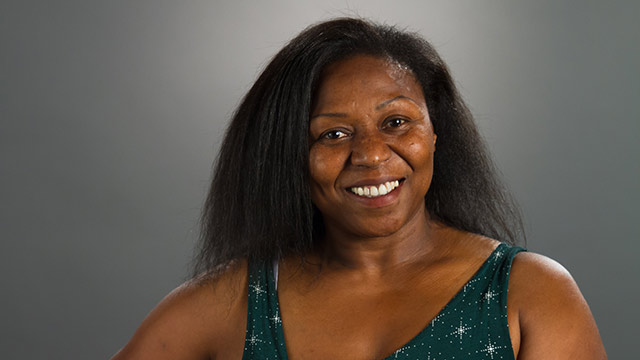
“This is not just fostering, it’s opening up my home and heart”
Pearl – TACT Foster Carer Since 2006
TACT London & The South
Pearl worked as a data analyst in a bank, before being inspired to become a foster carer. She talks about how she establishes an initial bond with the young people in her care.
From as early as I could remember my house would be full of children as my mum would offer to look after family’s, friend’s and neighbour’s children, and I would help her out. I’ve always had a love for kids and even when I worked at the bank I would say to my colleagues “I really want to be a foster carer” – and they actually encouraged me to do it. So, I put myself forward after doing a lot of research where I discovered TACT, as they really stood out to me because of their ethos and overall interest and care for children. It’s now been 20 years and TACT have always been there if me and the children need anything, or had questions to be answered. TACT communicate really well with me as well as with the children – and that makes us feel safe and comfortable.
When new children come into my care they’re introduced to my family very slowly and we never force it on them because it can be a very overwhelming time. My daughter is one of the adults more directly involved in my fostering journey as she acts as a backup carer for me when I need it which is extremely rare but useful to have for emergencies. She’s really good with the children and young people as she speaks to them at their level, no matter who they are – and both her and her children become extended family to any children in my care.
Once a child has settled in, I like to ask them simple questions such as ‘what’s your favourite food?’ or ‘what do you like to watch on TV?’ and then if they offer any answers I’ll go along with them and try to explore that a bit more to learn more about them. I’ll also tell them a little bit about me so they know who I am, and can start to become comfortable with me – but the main aim is to find out what they like and break the ice by opening them up to a conversation that interests them.
I’ll also ask my children and young people about their own friends and perhaps invite them round or meet them somewhere to help them maintain the positive relationships and connections that they already have. If the children in my care are from a different country then I like to learn what their traditional meals are and practice making them and then invite their friends round to join us to celebrate their home country’s food.
I once fostered a baby, and she was at the age where she could start learning to point to things – but she hadn’t been taught anything yet so I sat down with her on the floor and I’d ask “where’s your eyes? where’s your nose? show me your nose” and she’d point and I’d congratulate her and she was always so proud of herself. Even such little things like this really helped to build a connection and show the child that I’m their safe space and that I’m there for them no matter what.
I don’t know a single staff member at TACT who isn’t supportive quite frankly. I found them all supportive and anything I’ve needed they’ve acted as a friendly voice to help me access it, as well as letting me bend their ear with any concerns I may have. I feel very comfortable talking to all of them, and if I wasn’t they’d put me onto someone who I was comfortable talking to. I feel like TACT is a really tight-knit community and they’ve kept their ethos the whole 20 years I’ve been a carer with them. I don’t think I’d ever leave.
The staff are also amazing at interacting with the children on a deeper level by exploring their interests and then helping me to research how we could support them with that. One of my young people loved the idea of flying and TACT found him a gliding experience which he loved and now he studies aerospace, so it’s incredible to see how by nurturing his interests can lead to a successful career! Fostering is rewarding when you see positive outcomes.
The training I’ve had has also been invaluable. Especially with managing difficult behaviour and learning how to de-escalate situations. It’s allows me to stop when a child is becoming distressed and assess if there’s another way it could be handled or another point of view I could see it from to help relax and reassure the chid. Being able to de-escalate that heightened sort of anger that they sometimes have is extremely helpful and I wouldn’t have known how to do that by myself.